
Safe Sleep Positions for Babies: Current Recommendations Explained
August 22, 2026
Understanding Baby Movements During Sleep: The First Year
August 23, 2026
Key Takeaways
- Know the overheating signs: Hot, sweaty or clammy skin can mean your baby is too warm.
- Overheating matters: Excessive warmth during sleep is associated with an increased risk of SIDS.
- Keep it simple: Light layers, no hats, and a clear sleep space.
- Check temperature where your baby sleeps: Mattress-level temperature can be more informative than room temperature alone.
- Monitor for extra awareness: A multi-sensor monitor can help track temperature and other sleep conditions.
Keeping a baby warm feels instinctive. Newborns are small, their bodies are still developing, and their hands and feet can feel surprisingly cold. It is easy to assume that adding another blanket, another layer of clothing, or even a little hat will help them sleep more comfortably.
But when it comes to infant sleep, warmer does not necessarily mean safer.
Babies are not yet as effective as adults at regulating their body temperature. They can become too warm because of a hot room, too many layers of clothing, heavy bedding, direct sunlight, or simply being bundled more than the environment requires. Overheating is also one of the factors associated with an increased risk of sudden infant death syndrome (SIDS) and other sleep-related infant deaths.
What Does It Mean for a Baby to Be Overheated?
What are the signs of overheating?
Babies normally have a higher body temperature than you might expect. However, their hands and feet can remain cool even when the rest of their body is comfortably warm. This is why touching a baby’s hands or feet is not a reliable way to decide whether they need another layer, or, on the contrary, need a layer removed.
Instead, check the chest, tummy, or back of the neck. These areas give you a much better indication of your baby’s overall temperature.
Some common signs that your baby may be too warm include:
- Sweating, particularly around the head, neck or chest
- Hot skin on the chest, tummy or back
- Clammy skin
- Flushed or unusually red skin
- Unusual restlessness or discomfort
- Faster breathing or other signs that your baby is unwell
Overheating and fever are not the same thing
If you suspect your baby has a fever, use a thermometer rather than relying only on touch. Overheating and fever are not the same thing: a baby may become overheated because the sleep environment is too warm, while a fever is the body’s response to illness.
If your baby is hot and also seems ill, unusually sleepy, difficult to wake, is feeding poorly, or you are concerned about their condition, seek medical advice.
Why are babies more vulnerable to temperature changes?
Infants have immature temperature-regulation systems. They are smaller than adults, have a relatively large surface area compared with their body mass, and cannot remove blankets or clothing when they become uncomfortable.
That means the same room that feels pleasantly warm to an adult can become too warm for a baby, particularly when combined with several layers of clothing or bedding.
The goal is therefore not to make a baby’s sleep environment as warm as possible. It is to create a comfortable, stable environment without unnecessary insulation.
Why Is Overheating During Sleep Dangerous?
Overheating and SIDS
Overheating matters because it can place additional stress on an infant’s developing ability to regulate body temperature.
More importantly, research has found an association between overheating and an increased risk of SIDS and other sleep-related infant deaths. The American Academy of Pediatrics therefore recommends avoiding overheating and head covering as part of a safe infant sleep environment.
The relationship is complex, however. Researchers do not define “overheating” in exactly the same way across studies, and it is not possible to say that overheating alone causes SIDS.
Why bedding and clothing matter
Some of the factors associated with overheating—such as heavy blankets, soft bedding or head covering—can also create other hazards, including suffocation, entrapment or rebreathing.
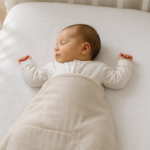
This is why safe-sleep recommendations work together rather than individually. A baby should be placed on their back, on a firm and flat sleep surface, with the sleep space kept clear of loose bedding and other objects, while also avoiding excessive warmth.
Sleeping position also matters. Sleeping on the stomach can increase the risk of overheating because it reduces heat loss and can increase body temperature compared with sleeping on the back.
Overheating is not only a summer problem
It is tempting to think about overheating only during heatwaves or hot summer nights. But babies can become too warm in winter as well.
Heating, thick sleepwear, blankets, fleece bedding, hats and attempts to “keep the baby cosy” can all add insulation. An infant who is wearing several layers in a comfortably heated bedroom may be warmer than necessary even when the weather outside is cold.
In fact, babies who are unwell may need fewer, rather than more, layers because illness or fever can already raise their temperature.
How Can You Prevent Your Baby From Overheating?
Dress your baby for the room
A useful rule from the American Academy of Pediatrics is to dress an infant with no more than one additional layer than an adult would comfortably wear in the same environment. Keep in mind that even this one additional layer could be unecessary.
In other words, don’t automatically add layers because your baby is small.
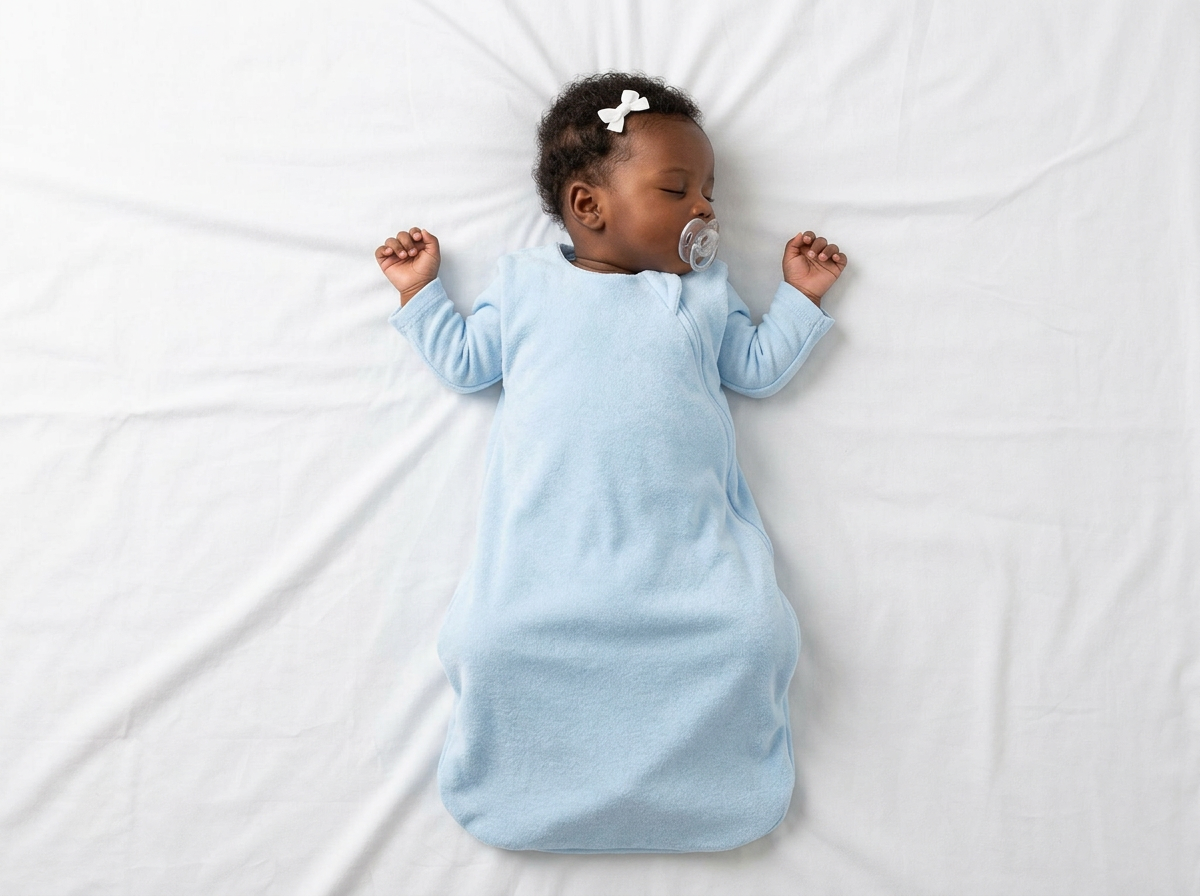
Lightweight clothing and a properly fitted sleep sack can make it easier to regulate warmth than loose blankets. If you use a sleeping bag, choose one appropriate for the room temperature and follow the manufacturer’s guidance about its thickness and how it should be used.
Avoid weighted sleep products, and never allow a sleeping bag or clothing to cover your baby’s head.
Keep hats off during sleep
A baby’s head plays an important role in releasing heat. For this reason, safe-sleep guidance advises against putting hats on babies indoors during sleep, except in specific circumstances immediately after birth or in neonatal care.
A hat may seem harmless, particularly in winter, but it can contribute to overheating and should not be part of a routine sleep outfit. It can also slip off during sleep, becoming a loose piece of fabric next to your baby’s face and creating a potential suffocation hazard.
For a safe sleep environment, keep your baby’s head uncovered.
Keep the sleep space clear
Loose blankets, quilts, duvets, pillows and other soft objects can increase the risk of both overheating and suffocation.
For babies, a simple sleep environment is the safest one: a firm, flat sleep surface with the baby placed on their back and no unnecessary objects around them.
If you use blankets, they should be lightweight and used according to safe-sleep guidance. A well-fitting baby sleep bag can be a practical alternative.
Pay attention to the room temperature
There is no single room temperature that guarantees safety for every baby. The American Academy of Pediatrics notes that research does not allow a precise universal temperature threshold for preventing overheating.
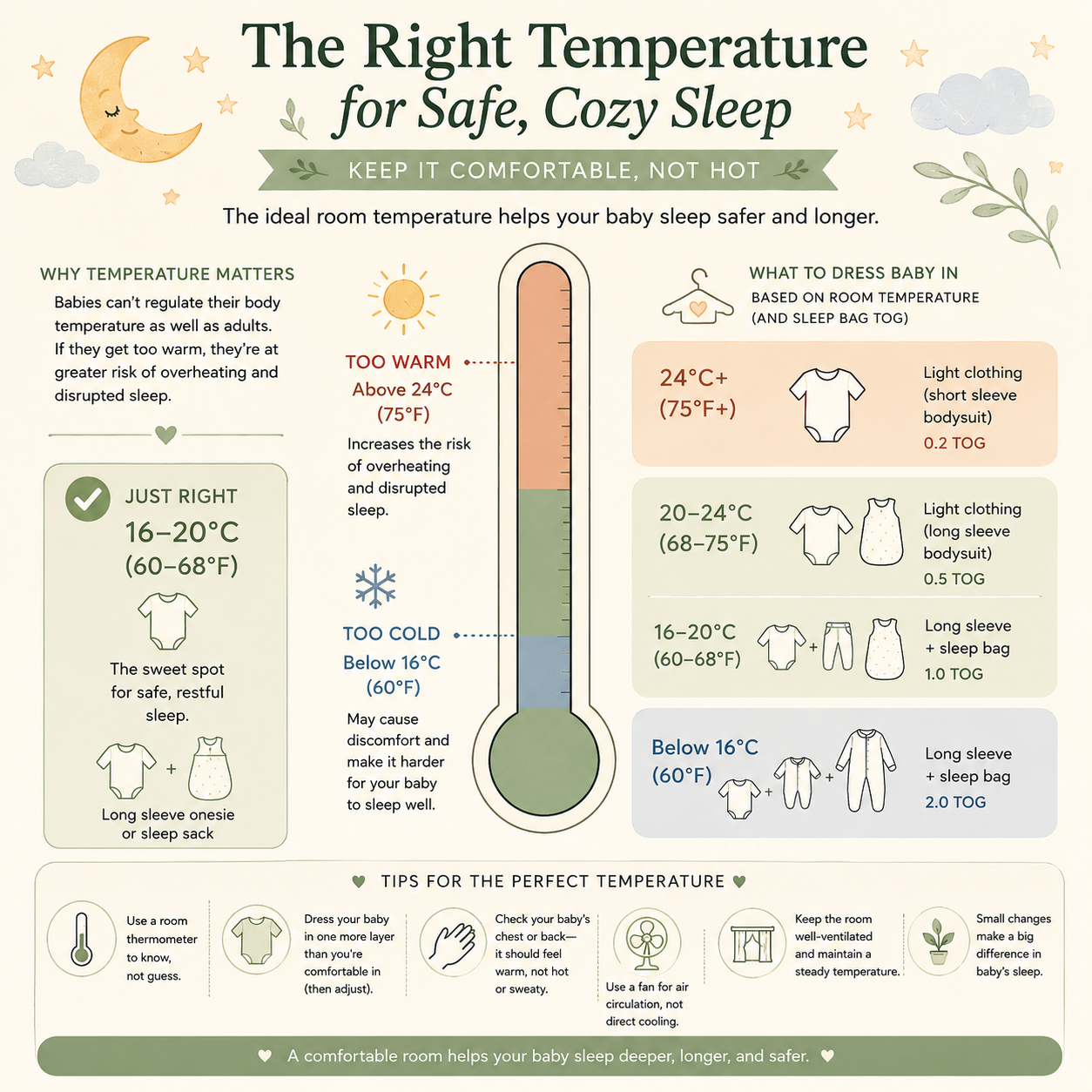
NHS uses 16–20°C (61–68°F) as a comfortable sleeping range for babies, together with appropriate light bedding or a lightweight sleep bag.
Whatever temperature your room is, avoid placing the crib or cot directly beside a radiator, heater or other heat source, and keep it out of direct sunlight.
Check matress level temperature
A room thermometer tells you about the general environment, but the temperature at mattress level tells you more about the conditions your baby is actually experiencing during sleep. Heat can vary within a room, particularly near heaters, windows, walls, or under bedding. Checking temperature close to the mattress can therefore give you a more accurate picture of your baby’s immediate sleep environment and help you identify when it may be getting too warm.
Consider a multi-sensor baby monitor
For parents who want an additional layer of awareness, a multi-sensor baby monitor can help monitor changes in the sleep environment while the baby is sleeping.
A system that monitors factors such as room temperature, movement, breathing patterns and other environmental signals can help parents notice changes that might otherwise go unnoticed during the night. Temperature monitoring, in particular, can provide an early indication that the room is becoming warmer than intended.
Monitoring is an additional layer—not a replacement for safe sleep
A multi-sensor monitor does not replace physically checking your baby, and it should never be presented as a way to prevent SIDS. The American Academy of Pediatrics notes that there is no evidence that home cardiorespiratory monitors prevent SIDS, and commercial monitoring devices should not be used as a substitute for established safe-sleep practices.
Instead, think of monitoring as additional information that helps you make informed decisions about your baby.
Your baby’s safe sleep position, appropriate clothing, clear sleep surface and comfortable room environment remain the foundation. A multi-sensor monitor can then help you keep an eye on changes in the environment and your baby’s sleep while you are nearby or asleep yourself.
A Cooler, Simpler Approach to Baby Sleep
When parents are worried about their baby being cold, the natural response is often to add something: another blanket, another layer, another hat.
With overheating, the opposite is usually true.
Choose clothing appropriate for the room. Keep the sleep space clear. Avoid hats and excessive bedding. Keep the cot away from direct heat and sunlight. Check your baby’s chest or tummy rather than their hands and feet. And during warm weather, pay particular attention to changes in room temperature throughout the night.
Focus on reducing avoidable risks. Your baby does not need to be wrapped up to feel “extra cosy.” They need a sleep environment that allows their developing body to regulate its temperature safely—and parents need enough information to recognise when that balance has shifted.
A simple room check, a gentle touch of the chest, and, if desired, a reliable multi-sensor monitor can provide useful reassurance without replacing the fundamentals of safe sleep.
Warm is comfortable. Hot and sweaty is a warning sign.