
Why Does My Newborn Breathe So Irregularly?
June 19, 2026
How to Create a Safe and Cozy Sleep Environment for Your Baby
June 22, 2026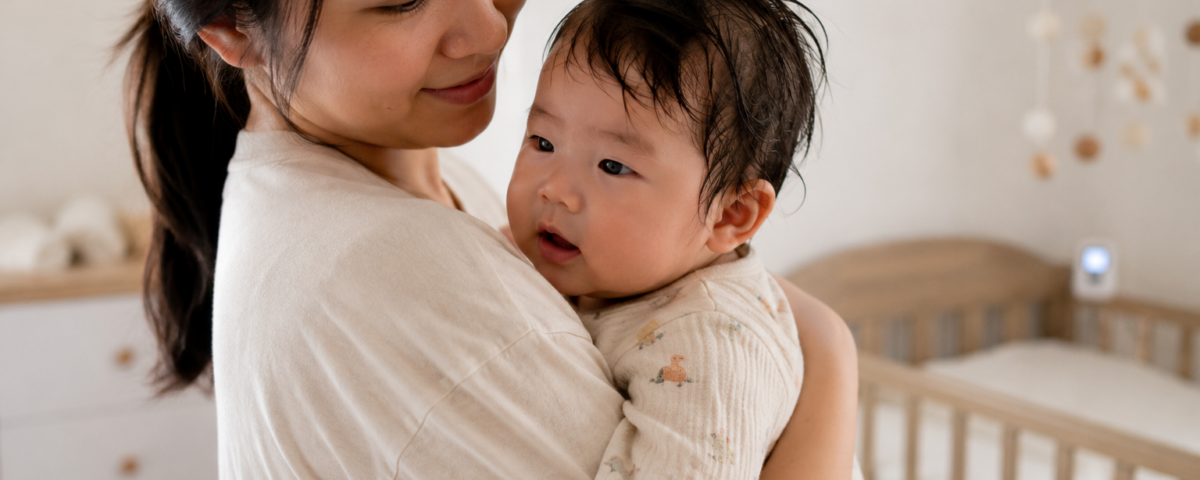
You finally get your baby to sleep.
The room feels comfortable. The pajamas seem appropriate. Everything appears fine.
Then you gently touch the back of your baby’s neck or lift their head after a nap and notice damp hair, sweaty skin, or a slightly moist bedsheet.
Many parents immediately start asking questions. Is my baby too hot? Do they have a fever? Could something be wrong?
In most cases, sweating during sleep is completely normal in babies. Babies regulate temperature differently than adults, and some babies naturally sweat more than others. Understanding why babies sweat can help parents feel more confident and know when sweating is simply part of normal development—and when it may deserve medical attention.
Why Do Babies Sweat During Sleep?
There are several reasons why babies may sweat during sleep.
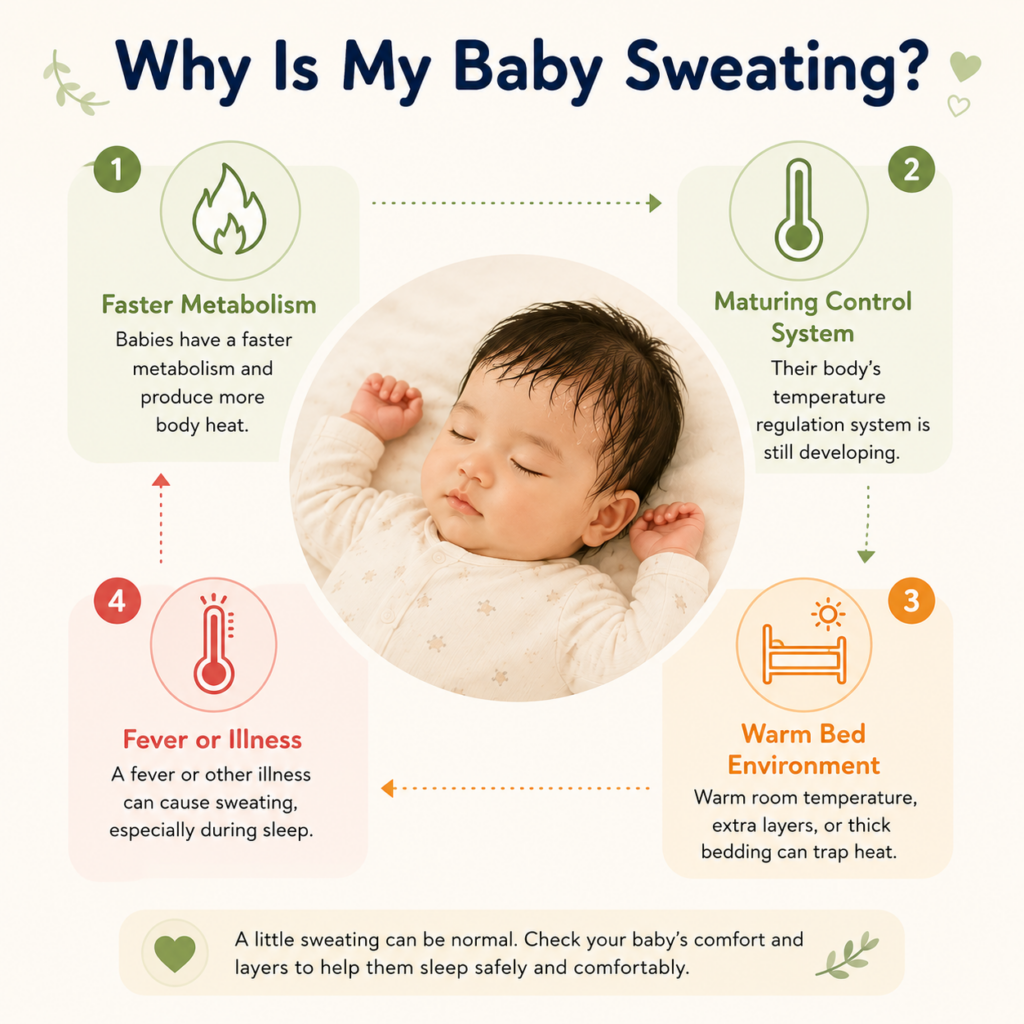
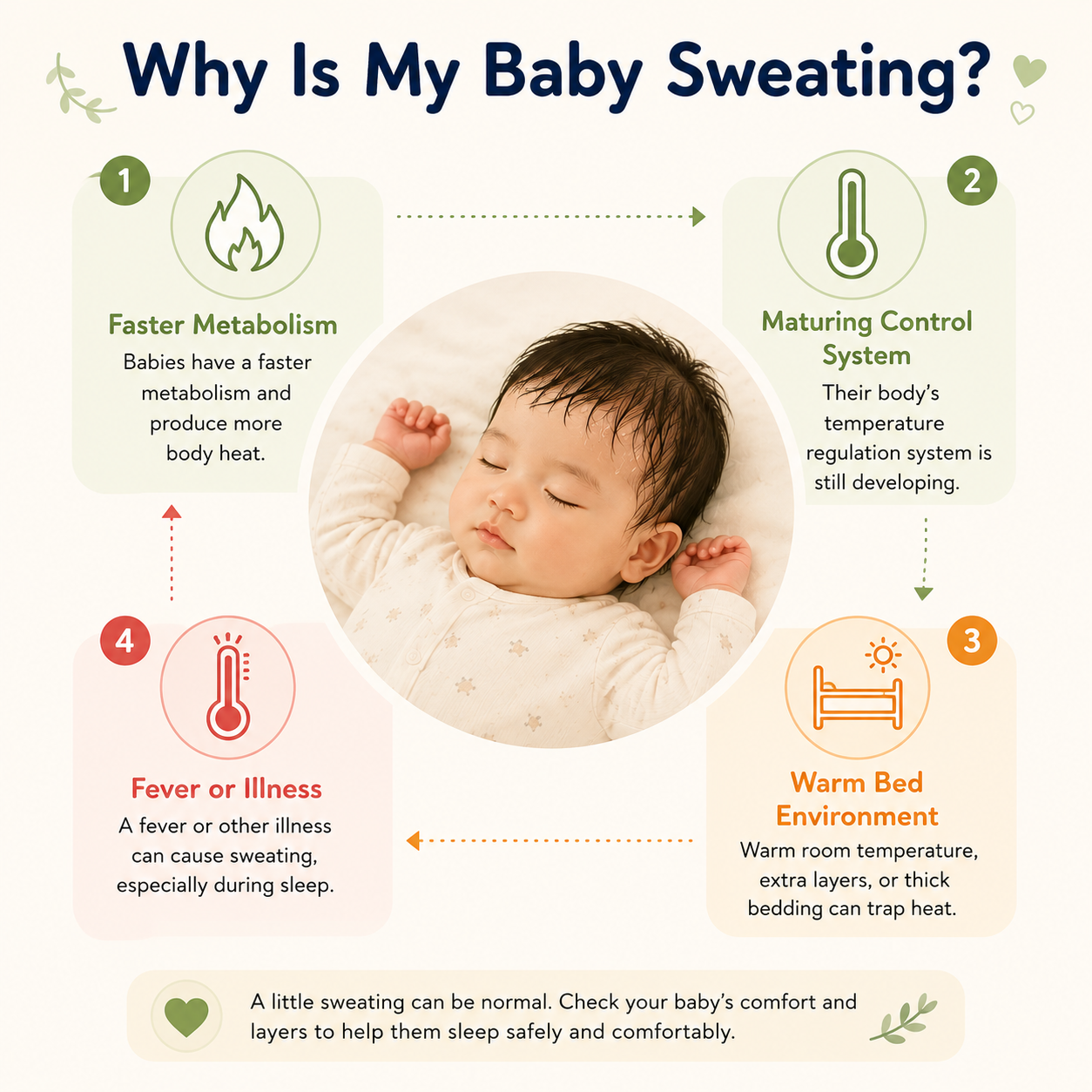
First, babies naturally produce more body heat than many parents realize. Their bodies are growing rapidly, and their metabolism is working hard to support that growth.
Second, the systems that regulate body temperature are still developing. During the first months of life, babies are less efficient at maintaining a stable temperature than older children and adults.
Finally, babies are often dressed more warmly than necessary. This usually comes from a place of love. Parents and grandparents naturally worry about babies getting cold and may add an extra blanket, thicker pajamas, socks, or another layer “just in case.”
As a result, many babies become warmer than they need to be, especially during sleep, leading to overheating. When a baby’s body becomes too warm, sweating is one of the ways it releases excess heat.
Why Does My Baby’s Head Sweat So Much?
One of the most common concerns parents notice is head sweating.
You may pick your baby up after a nap and find damp hair or a slightly moist spot on the sheet beneath their head.
This is usually normal.
A baby’s head makes up a relatively large proportion of their body size and plays an important role in releasing heat. During sleep, the head remains in contact with the mattress for extended periods, allowing warmth to build up in that area. Because of this, sweating is often most noticeable on the scalp, forehead, and back of the head.
Head sweating by itself is rarely a cause for concern.
Some Babies Simply Sweat More Than Others
Every baby is different.
Some infants rarely seem warm, while others wake from every nap with damp hair.
Just as adults vary in how much they perspire, babies vary too.
A baby who sweats during sleep but is otherwise feeding well, growing normally, breathing comfortably, and acting like themselves is usually experiencing a normal variation in temperature regulation.
How Can I Tell If My Baby Is Too Warm?
Many parents worry about overheating, especially after learning about safe sleep recommendations.
A good rule is to check your baby’s chest, back, or neck rather than their hands or feet. Hands and feet are often cool even in perfectly healthy babies and are not reliable indicators of overall body temperature.
Signs that your baby may be too warm include:
- A hot chest or back
- Damp clothing or bedding
- Flushed skin
- Excessive sweating
- Restlessness or difficulty settling
If your baby appears too warm, remove a layer of clothing or adjust the room temperature.
Safe Sleep and Avoiding Overheating
Creating a comfortable sleep environment helps reduce unnecessary sweating and supports safe sleep.
In warm climates and well-heated homes, babies are often dressed more warmly than necessary. Avoid unnecessary blankets, extra layers, or heavy sleepwear, especially during sleep.
As a general rule, if you feel comfortable, your baby is likely comfortable too. Some pediatricians even recommend dressing babies in the same number of layers as an adult—or one layer less in warm conditions. At the very least, babies rarely need more than one additional light layer compared to a comfortably dressed adult.
Parents can help by:
- Dressing babies in lightweight sleep clothing appropriate for the room temperature
- Avoiding heavy blankets, quilts, comforters, and duvets
- Avoiding hats during indoor sleep
- Checking the baby’s chest or back rather than hands and feet
- Adjusting layers if the baby consistently wakes up sweaty
Many parents are surprised to discover that babies often need fewer layers than they expected, especially in warmer climates or during summer months.
When in doubt, it is usually easier to add a layer later than to cool down an overheated baby.
 Sweating vs Fever: How Can Parents Tell the Difference?
One of the first thoughts many parents have when they notice sweating is whether their baby might be sick.
While sweating can occur when a fever is breaking, sweating alone does not mean a baby has a fever. A baby may wake up sweaty simply because they were warm during sleep. A sweaty baby who is feeding normally, behaving normally, and otherwise appears well is often simply warm.
The only reliable way to determine whether a baby has a fever is to measure their temperature with an appropriate thermometer. If your baby feels warm, checking their temperature is more useful than relying on touch alone.
A temperature of 38°C (100.4°F) or higher is generally considered a fever and should be promptly discussed with a healthcare provider, especially in babies younger than three months.
Can Sleep Temperature Monitoring Help?
While occasional sweating is usually normal, many parents still wonder whether their baby is too warm during sleep.
One challenge is that room temperature does not always reflect the temperature around the baby. Bedding, clothing, sleep position, and heat trapped in the mattress can all affect a baby’s sleep environment.
Monitoring the temperature at the sleep surface can provide additional insight into whether the sleep environment remains comfortable throughout the night, helping parents make informed decisions about clothing, bedding, and room conditions without relying solely on guesswork.
The Bottom Line
Finding your baby sweaty after a nap or overnight sleep can be surprising, especially for first-time parents.
In most cases, it is simply a normal result of a baby’s developing temperature regulation system, higher heat production, or being dressed a little too warmly.
A comfortable sleep environment, appropriate clothing, and attention to your baby’s overall well-being are usually far more important than a little sweat.
Most of the time, a sweaty baby is simply a warm baby—not a sick one.