
Is It Normal for My Baby to Sweat During Sleep?
June 20, 2026
Parental Sleep Anxiety: Why New Parents Struggle to Sleep and How to Cope
June 23, 2026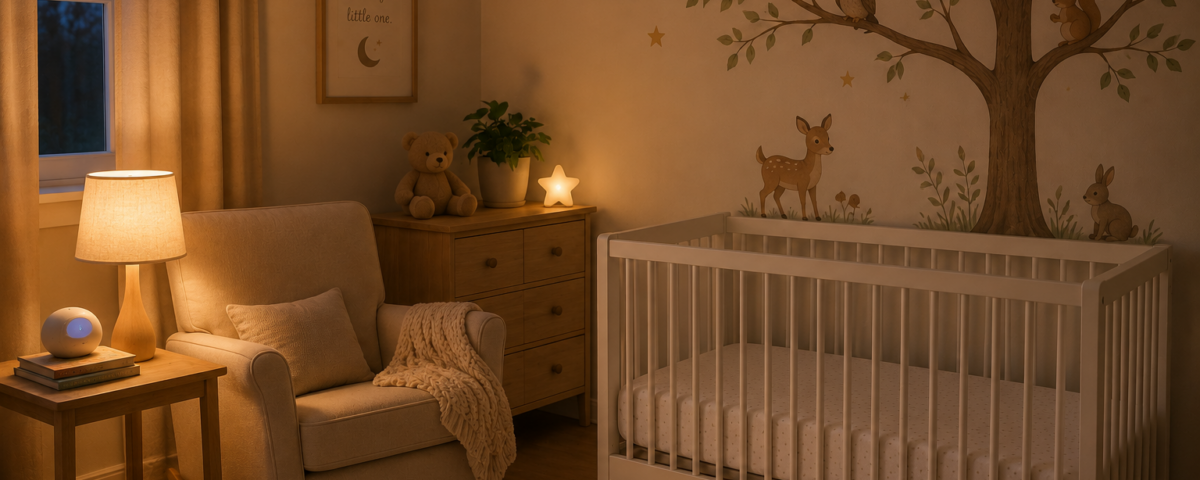
The time has come to prepare the nursery and the crib for your baby. You were imagining soft blankets, plush toys, canopies, pastel banners, a huge stuffed bear, the most adorable crib bumper with friendly cows and funny ducklings, and maybe a few tech gadgets.
Then you checked the safe sleep guidelines: a bare crib, a firm mattress, and a fitted sheet.
In six words, your Pinterest-worthy fairytale crib is out.
But we are here to help. Safety matters most of all when you have a newborn, and if that requires an empty crib, then an empty crib it must be. That does not mean your baby won’t feel cozy during the night or while napping during the day. Cozy does not necessarily mean padded bumpers and layer upon layer of soft blankets.
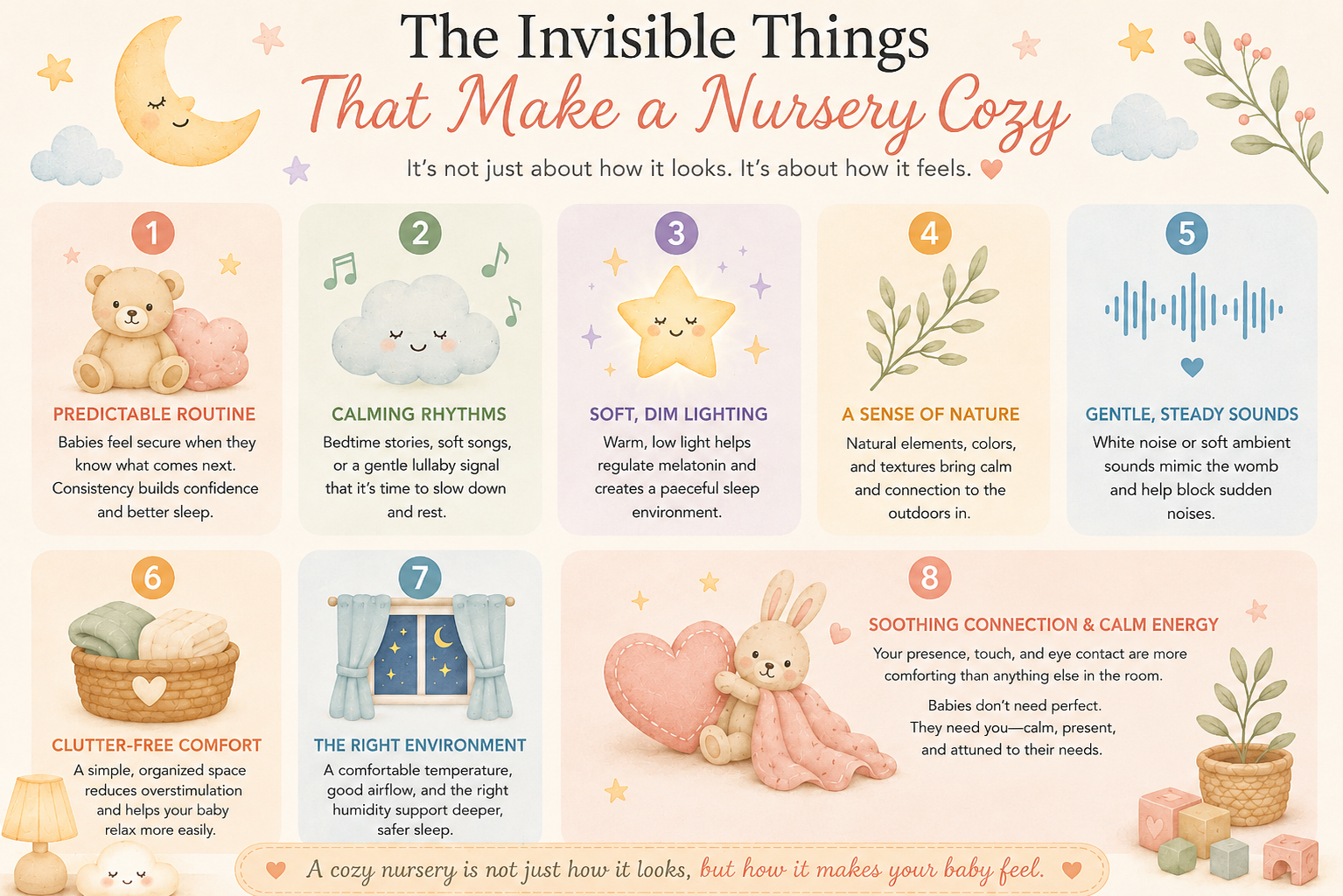
For a baby, coziness comes from a calm room, a comfortable temperature, gentle lighting, familiar routines, and the reassuring presence of parents who will respond when they are needed.
This guide brings together the essentials of baby sleep safety with the tender side of sleep: how to create a nursery that is safe, calm, and genuinely comforting.
What is the safest sleep environment for a baby?
The safest sleep environment for a baby is a firm, flat sleep surface, such as a safety-approved crib, bassinet, or play yard, with only a fitted sheet on the mattress. Babies should be placed on their backs for sleep, and the sleep space should remain free from loose blankets, pillows, stuffed animals, and bumpers.
These recommendations are consistent with the safe sleep guidelines published by the American Academy of Pediatrics (AAP) and the Centers for Disease Control and Prevention (CDC), which advise placing babies on their backs on a firm, flat sleep surface and keeping soft objects and loose bedding out of the sleep area.
This recommendation can feel very plain when you first hear it, especially if you have spent time preparing a beautiful nursery. We are used to thinking of comfort as something soft and layered, so a bare crib may look unfinished or even a little lonely.
For babies, though, safety is part of comfort. A clear sleep space gives them room to rest without extra objects around them, while the warmth of the room, the softness of your voice, and the consistency of your care provide the emotional comfort they need.
Is a bassinet or a crib better for newborn sleep?
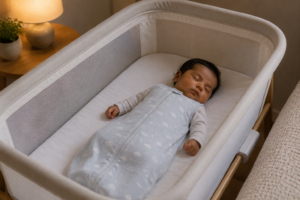 Both a bassinet and a crib can be safe for newborn sleep when they meet current safety standards and are used according to the manufacturer’s instructions. Many families start with a bassinet because it keeps the baby close during the early weeks, while a crib offers more space as the baby grows.
A bassinet can be especially helpful in the newborn stage, when nights are often broken into feeding, changing, soothing, and trying to sleep again. Having your baby close can make those repeated wake-ups feel a little more manageable, especially when everyone in the house is still adjusting.
A crib becomes the better option once your baby grows, becomes more active, or reaches the bassinet’s size or weight limit. The safest choice is not about which one feels more beautiful in the nursery, but whether the sleep space is firm, flat, stable, and appropriate for your baby’s stage.
What should be inside a newborn’s crib?
A baby’s crib should contain only a firm mattress covered with a fitted sheet.
Loose blankets, pillows, stuffed animals, crib bumpers, and decorative cushions should stay out of the crib.
This is often the moment when safe sleep advice feels most different from what parents imagined. Nursery photos often show cribs styled with blankets, toys, and soft details, but those images are not always showing a safe sleep setup for real sleep.
A simple crib is not a neglected crib. It is a carefully prepared space where your baby can rest without unnecessary risks, while the warmth and tenderness come from everything around the crib: your routine, your touch, your voice, and the calm environment you create.
How firm should a baby mattress be?
A baby mattress should be firm, flat, and fitted correctly to the crib, bassinet, or play yard. There should not be gaps around the mattress, and parents should avoid adding toppers, extra padding, folded blankets, or cushions beneath the fitted sheet.
Many parents are surprised by how firm an infant mattress feels. Compared with an adult mattress, it may seem almost too hard, but baby mattresses are designed that way because babies need a stable sleep surface rather than a soft, sinking one.
It helps to remember that babies do not judge comfort the way adults do. They are not looking for a plush surface; they need a safe place to sleep, suitable clothing, a comfortable room, and responsive care when they wake.
Can a baby sleep comfortably without blankets?
Yes, a baby can sleep comfortably without loose blankets when dressed appropriately for the room temperature. Baby sleep sacks or wearable blankets can provide warmth without adding loose bedding to the crib.
This can feel counterintuitive, especially on colder nights. Many parents naturally want to tuck a baby in the way they would tuck in an older child, because covering someone with a blanket feels like an act of love.
For babies, care looks a little different. A suitable layer of clothing and a well-chosen baby sleep sack can keep your baby warm while preserving a safer sleep space, and over time the sleep sack itself can become part of the bedtime routine, familiar and reassuring.
How can I make my baby’s sleep space cozy without blankets or pillows?
You can make your baby’s sleep space cozy by focusing on the environment around the crib rather than placing soft items inside it.
Think of coziness as something your baby experiences through the whole room. The room is not too hot or too cold, the lights are not harsh, the air is comfortable, and when your baby wakes, someone familiar comes close, speaks gently, and responds.
A comfortable room temperature, a suitable sleep sack, soft lighting, low noise, and a calming bedtime routine can all help your baby feel settled while keeping the sleep space safe.
What is the best room temperature for baby sleep?
A comfortable room temperature for baby sleep is often around 68°F to 72°F (20°C to 22°C) although the right feeling can vary depending on clothing, humidity, season, and the individual baby. The goal is to avoid overheating baby and keep the sleep environment in a stable and comfortable temperature.
Temperature is one of the things parents tend to second-guess most often. It is very normal to stand beside the crib at night and wonder whether the room feels a little warmer than before, or whether your baby might need one more layer.
Instead of aiming for perfection, it is usually more helpful to aim for consistency. A nursery that stays comfortably cool, paired with appropriate baby sleep clothing, can help your newborn rest without the discomfort of becoming too warm or too cold during the night.
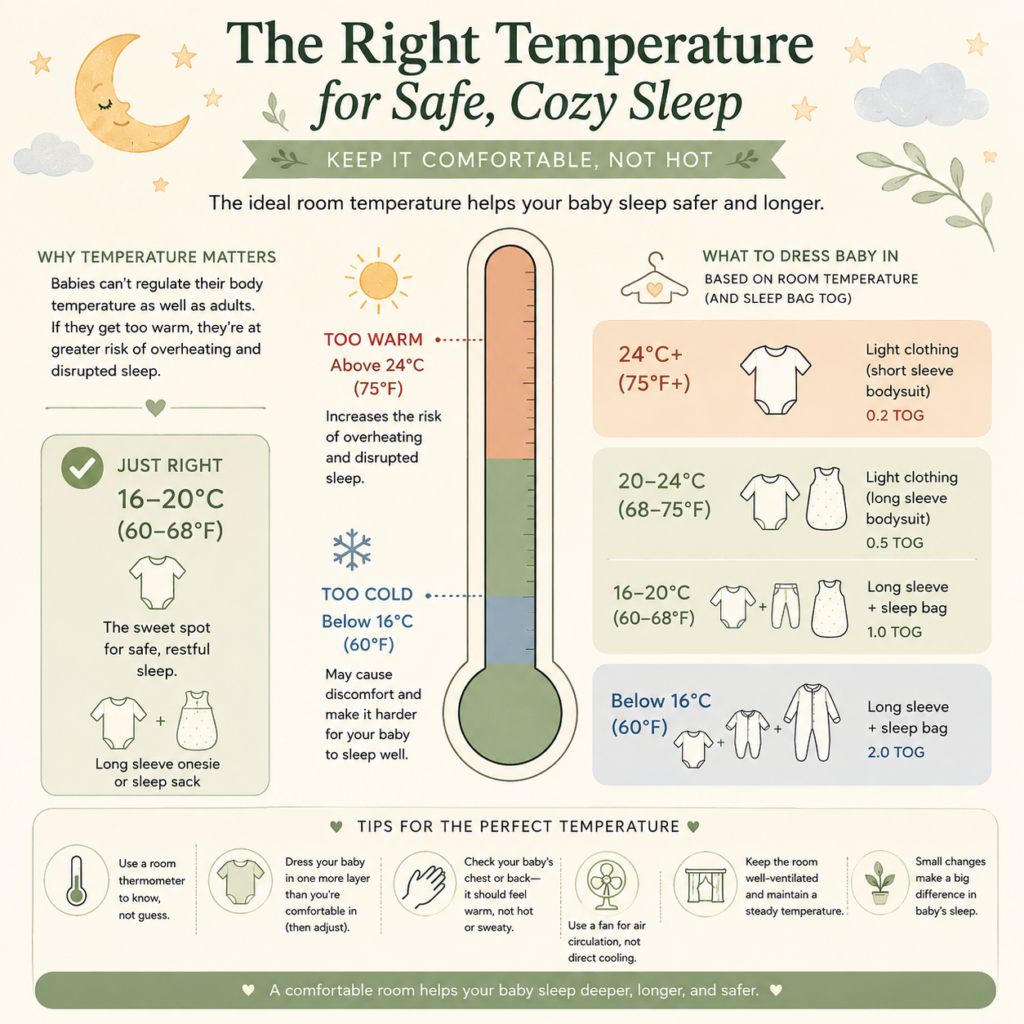 How do I know if my baby is too hot or too cold while sleeping?
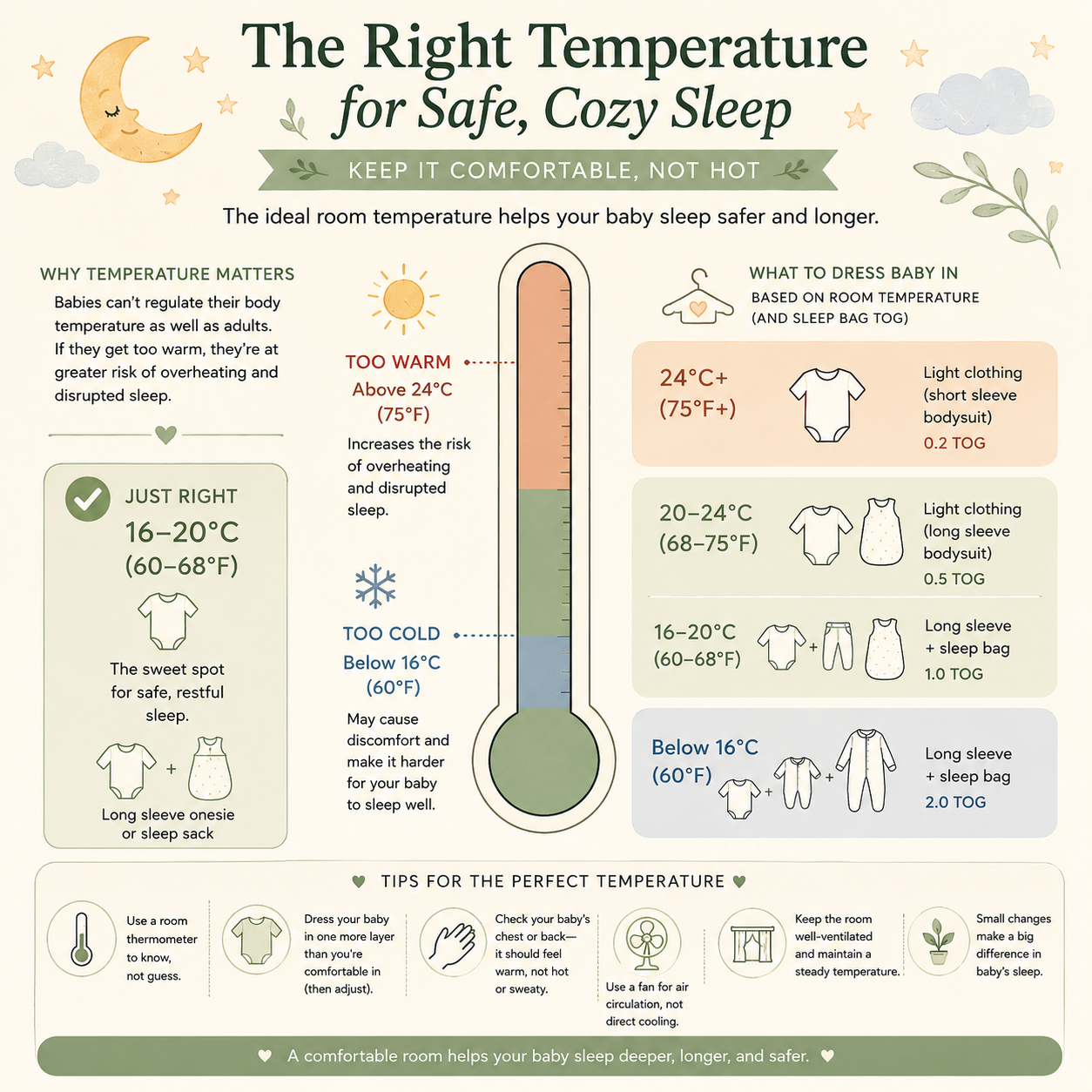
A baby may be too warm if they are sweating, have damp hair, flushed skin, or feel unusually warm on the chest or back. A baby may be too cold if their body feels cool and they seem unsettled, although cool hands and feet alone are not always reliable indicators of overall body temperature.
This is one of those questions that can make parents anxious because babies cannot simply tell us how they feel. It is perfectly normal to check more than once, especially during the first months, when every small change can seem important and you are still learning your baby’s cues.
Monitoring the nursery temperature can be very helpful, but room temperature is only part of the picture. The environment immediately around your baby may feel warmer than the surrounding air, particularly when several factors combine. A warm flannel sheet, thicker sleepwear, a winter sleep sack, and a mild spring night can create a much warmer sleep surface than parents might expect based on the room temperature alone.
Understanding both the nursery conditions and the temperature of the sleep surface can help parents make small adjustments before discomfort begins to affect sleep. Sometimes the solution is as simple as choosing a lighter sleep sack, switching to a cotton fitted sheet, or removing a layer as the seasons change.
Does humidity matter in a baby’s nursery?
Humidity can affect how comfortable a nursery feels, especially when the air is very dry or very damp. Dry air may make sleep feel less comfortable, while too much humidity can make the room feel heavy, warm, or unpleasant.
Parents often think first about temperature, but humidity can change how that temperature feels. A room may technically be within a normal range and still feel uncomfortable if the air is too dry from heating or too humid during warm weather.
This is where monitoring the sleep environment can become practical rather than abstract. When you know the humidity level, you can better understand why the room feels stuffy, why your baby may seem sweaty, or why small adjustments to ventilation or air quality may help.
Does lighting affect a baby’s sleep?
Lighting can affect baby sleep because light helps signal when it is time to be awake and when it is time to rest. A dim, calm sleep environment at night can help support bedtime and nighttime settling, while natural daylight during the day helps babies gradually learn the difference between day and night as their circadian rhythm matures.
Many parents discover this through experience rather than from a guide. A baby who was sleepy before a diaper change may suddenly become fully awake after bright lights, playful voices, and too much stimulation in the middle of the night.
The goal is not to create a perfect blackout environment every minute of the day. In fact, exposure to natural daylight during waking hours is an important part of helping babies develop healthy sleep patterns. What matters is creating a clear distinction between day and night.
For nighttime, many families find that soft, warm lighting works best. A dimmable lamp, a low-intensity night light, or indirect lighting that allows parents to feed, change, and check on their baby without flooding the room with bright light can help maintain a calm atmosphere. Harsh overhead lighting is often best avoided during nighttime care, as it may make it more difficult for babies to settle back to sleep.
Does noise affect baby sleep?
Noise can affect baby sleep, especially when it is sudden, loud, or unpredictable. A calm and consistent sound environment is ideal, and may even be more helpful than complete silence.
Most homes are not silent, and they do not need to be. There may be an older sibling in the next room, a door closing, a dog barking, or someone moving around the kitchen after bedtime.
What matters is not removing every sound from family life, which is rarely possible, but creating a sleep environment that feels generally calm. Babies can often adapt to ordinary background sounds, especially when bedtime routines and room conditions remain consistent.
This may also explain why some babies seem comforted by white noise. Before birth, they spent months surrounded by the constant sounds of their mother’s body: her heartbeat, breathing, voice, and movements. Babies do not necessarily find silence comforting. For some newborns, a gentle and steady background sound can feel familiar and reassuring, helping mask the occasional noises that would otherwise disturb sleep.
Why is a bedtime routine important for your baby’s sleep?
A bedtime routine helps your baby recognize that sleep is approaching. Over time, familiar activities performed in the same order create a sense of predictability and security, making it easier for your baby to settle and fall asleep.
When we think about a cozy sleep environment, we often focus on the nursery itself. Yet some of the strongest sleep cues are not physical objects at all. They are the small rituals that happen every evening: a bath, pajamas, a feeding, a lullaby, a cuddle, or a favorite story.
For a newborn, these routines may seem more meaningful to the parents than to the baby. As weeks and months pass, however, babies begin to recognize patterns. They learn that certain sounds, words, songs, and activities are associated with comfort, closeness, and eventually sleep.
Many families gradually create their own bedtime traditions without planning them. It may be a particular lullaby sung every night, a story that is always told before bed, or a picture on the wall that becomes part of a familiar narrative. Over time, these seemingly small details become woven into the emotional landscape of bedtime.
A bedtime routine transforms a safe sleep space into a familiar one. Long before a child understands the concept of bedtime, they learn to recognize the feelings that surround it: calm voices, dim lights, familiar stories, and the comforting certainty that everything is as it should be.
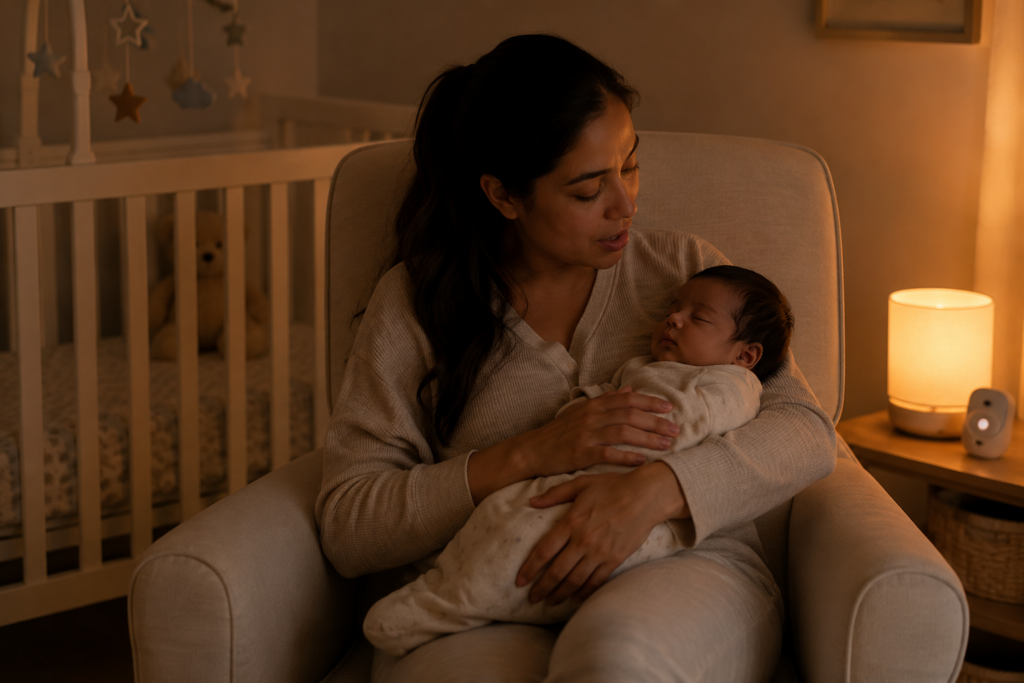 Do baby monitors help create a safer sleep environment?
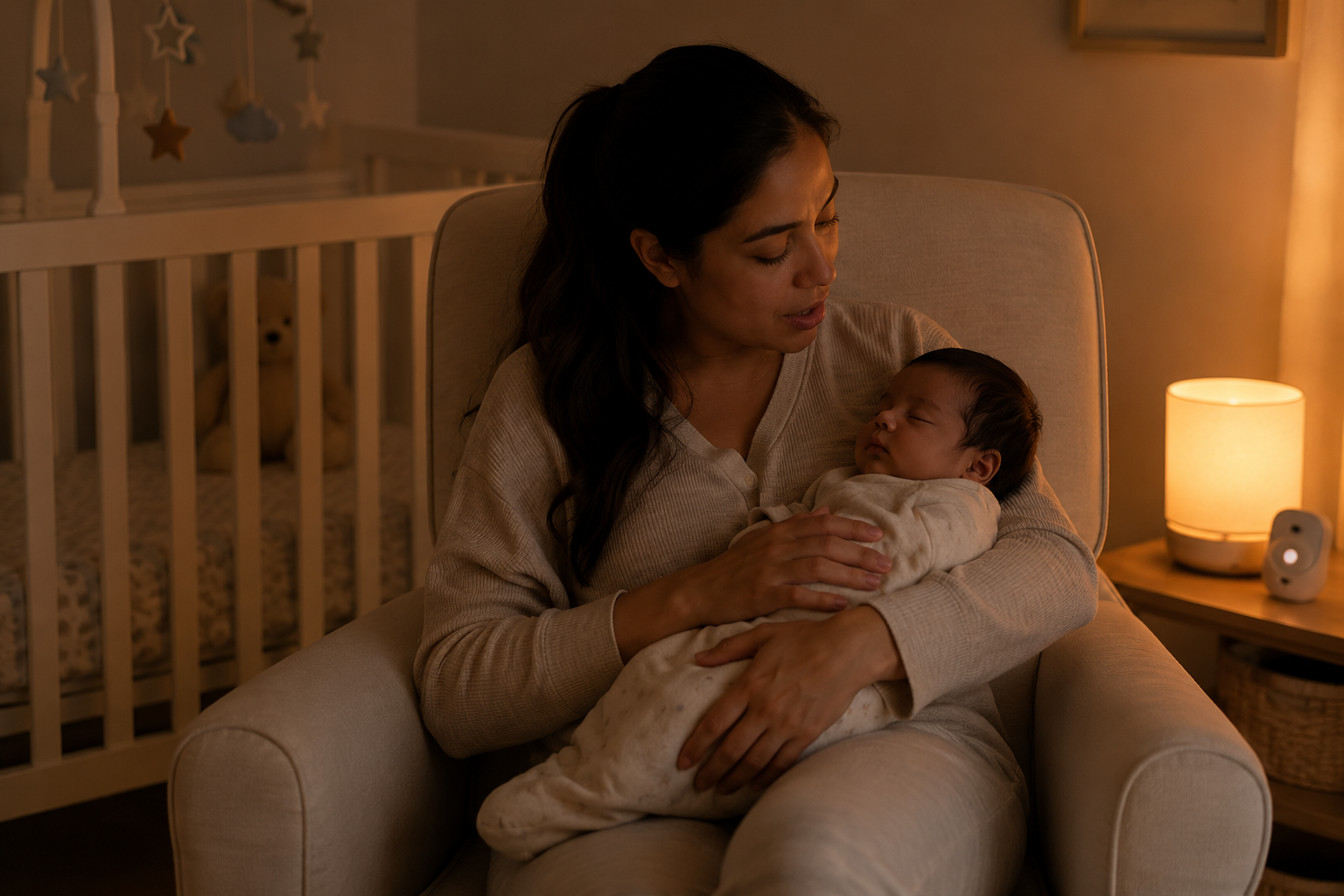
Baby monitors can help parents stay aware of their baby and the nursery environment without constantly entering the room. Depending on the type of baby monitor, parents may be able to check sound, movement, room temperature, humidity, or video, which can support better understanding of the baby’s sleep space.
Parents have always monitored their babies in one way or another. They listen from the next room, pause outside the door, check the crib, touch the baby’s back, and wonder whether everything is all right.
Modern baby monitoring tools do not replace parental instinct, and they should not be presented as a substitute for safe sleep practices. Their real value is that they can help parents notice changes in the sleep environment and respond with more confidence, whether that means adjusting the room temperature, checking if the nursery feels too humid, or seeing whether the baby has simply stirred and settled again.
What should parents monitor in a baby’s sleep environment?
Parents may choose to monitor different aspects of their baby’s sleep environment, from temperature and humidity to breathing, movement, crying, and sleep patterns. While these measurements provide useful information, their real value lies in helping parents understand what their baby may be experiencing and respond when comfort, reassurance, or attention is needed.
A baby who suddenly becomes restless during the night may not be uncomfortable for the reason we first imagine. Perhaps the room has become warmer than usual in the early morning hours. Perhaps the air has become dry after several hours of heating. Perhaps the sleep surface is retaining more warmth than expected, even though the nursery itself feels comfortable. Monitoring can help parents identify these subtle changes and make small adjustments before they begin to affect sleep.
Monitoring can also help parents stay connected to their baby throughout the night. A baby may wake, cry, become unsettled, experience a change in breathing, or simply need comfort before settling back to sleep. Alerts and notifications can help parents become aware of these moments more quickly, allowing them to respond with confidence rather than relying on guesswork.
Ultimately, monitoring is not about collecting data for its own sake. It is about helping parents understand their baby’s sleep environment, notice when something may be affecting comfort or well-being, and provide care when it is needed. In that sense, the technology itself is not the most important part. The most important part is the reassurance that when your baby needs you, you can be there.
Key takeaways for a safe and cozy baby sleep environment
A safe sleep environment for a baby begins with the essentials: back sleeping, a firm and flat surface, a fitted sheet, and a crib, bassinet, or play yard free from loose bedding and soft objects. These basics matter, and they should remain the foundation of every sleep setup.
A cozy baby sleep environment is built around that foundation. The room can be calm, the temperature comfortable, the lighting gentle, the air pleasant, and the routine reassuring, so that your baby’s sleep space feels both safe and loved.
The safest crib may look simple, but the care surrounding it is anything but empty. When parents create a sleep environment that protects the baby while also responding to comfort, they create something deeply reassuring: a place where their baby can rest, and where they can rest a little more peacefully too.