

Why Does My Baby Wake Up So Often at Night? Common Causes by Age
July 12, 2026
Baby Sleep Cues: How to Tell When Your Baby Is Tired
July 26, 2026
Parents often worry about nighttime sleep, but daytime sleep is just as important during the first years of life. Naps are not simply breaks between feeds or playtime. They are an essential part of healthy brain development, physical growth, and emotional well-being.
Many parents wonder whether skipping a nap will help their baby sleep better at night. In most cases, the opposite happens. Babies who become overtired often find it harder to fall asleep, wake more often during the night, and sleep less soundly overall.
Understanding why babies need naps—and how those needs change as they grow—can make it easier to support healthy sleep habits for your baby or toddler.
Why Do Babies Need Naps?
During the first years of life, babies grow faster than at any other stage of life. Their brains form millions of new neural connections every day, while their bodies develop muscles, bones, and organs at an extraordinary pace.
Naps give babies time to process everything they have learned while awake. Research shows that sleep helps strengthen memory, supports language development, and consolidates new skills such as rolling over, sitting, crawling, standing, and walking.
During deep sleep, the body releases growth hormone, which supports healthy growth and tissue repair. Since babies spend a significant amount of deep sleep during naps, daytime sleep contributes to their physical development.
How Many Naps Does a Newborn Need?
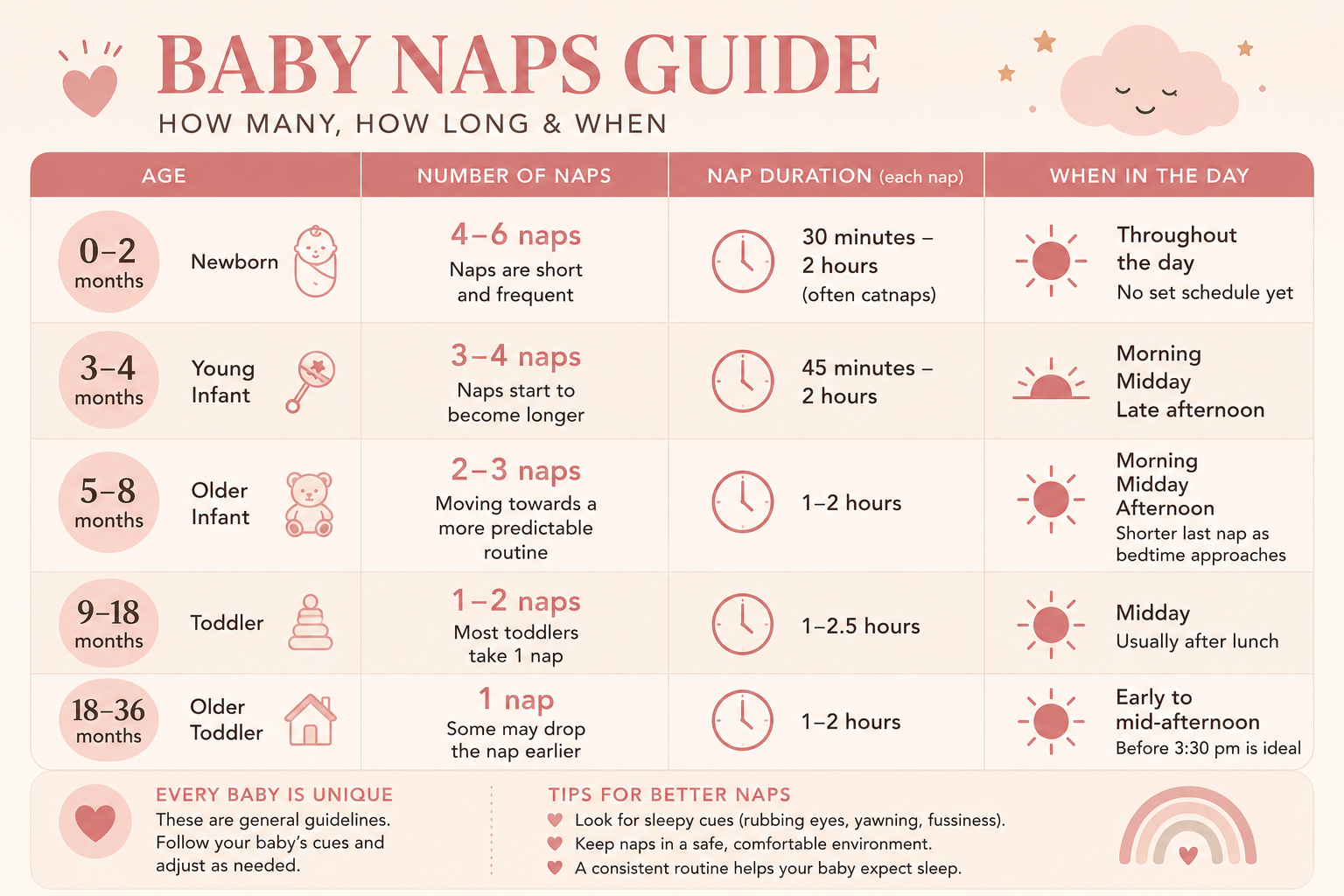
Newborns from birth to around 3 months have not yet developed a regular day-and-night rhythm. Instead, they sleep in short periods throughout the day and night.
Most newborns sleep between 14 and 17 hours every 24 hours. Those hours are usually divided into four to six naps—or even more.
Rather than following a strict schedule, it is better to watch your baby’s sleep cues. Most newborns can stay awake for only 45 to 90 minutes before becoming tired.
How Many Naps Does a Baby Need at 3 to 6 Months?
Around 3 months of age, many babies begin to develop a more predictable sleep pattern. Their naps become more regular, and they start sleeping for longer stretches at night.
Most babies in this age group sleep between 12 and 16 hours per day and usually take three or four naps.
A typical day might include a morning nap, a midday nap, an afternoon nap, and sometimes a short late-afternoon catnap. Wake windows also become longer, but most babies are still only comfortable staying awake for about 1½ to 2 hours.
How Many Naps Does a Baby Need at 6 to 12 Months?
As babies approach their first birthday, their sleep becomes more organised.
They still need around 12 to 16 hours of sleep each day, but this is usually divided between nighttime sleep and two or three daytime naps.
Most babies naturally settle into two naps: one in the morning and another after lunch. Younger babies may still need a third, shorter nap in the late afternoon.
This stage is full of exciting milestones. Babies are learning to crawl, stand, cruise along furniture, and often take their first steps. Sleep gives the brain time to organise these new experiences and strengthen the skills they practise during the day. On the other hand, as babies master new skills such as rolling, crawling, standing, or walking, they may become so eager to practise them that they resist naps or have more difficulty settling to sleep.
How Many Naps Does a Toddler Need?
Between 12 and 24 months, most children gradually transition to one daytime nap. Toddlers typically need 11 to 14 hours of total sleep each day, including one afternoon nap that often lasts between 1½ and 3 hours.
Although toddlers seem endlessly energetic, they are still developing rapidly. Language, memory, problem-solving, and emotional regulation continue to improve during sleep. That afternoon nap helps support all of these important processes.
When Do Toddlers Stop Napping?
Some children naturally stop napping around their third birthday, while others still need an afternoon sleep closer to age 5. Every child develops at their own pace.
Even after regular naps end, many preschoolers still benefit from a period of quiet time during the day. If your toddler regularly falls asleep in the car, becomes very irritable in the late afternoon, or struggles to stay awake before bedtime, they may not be ready to give up their nap.
Following your child’s natural sleep needs usually works better than trying to stop naps according to age alone.
Where Should Babies Nap?
The safest place for a baby to nap is the same place they sleep at night: on their back, on a firm, flat mattress in a safety-approved cot or crib, with no pillows, blankets, toys, bumpers, or other loose items.
Whenever possible, let your baby nap in their usual sleep space. A familiar environment helps babies recognise that it is time to sleep and makes it easier to build healthy sleep habits. A baby monitor can help you hear or see when your baby wakes, allowing you to get on with your day or rest yourself.
For most babies, a quiet room with dimmed natural light is ideal. There is no need for complete darkness or absolute silence. Normal household sounds are usually fine, and some families find that white noise helps babies settle.
Naps in a buggy or car seat are sometimes unavoidable when you’re out and about, but they should not become your baby’s regular sleep environment. If your baby falls asleep while travelling, move them to a safe, flat sleep surface as soon as it is practical to do so.
Should You Wake a Sleeping Baby From a Nap?
In most situations, no. Babies benefit from completing their sleep cycles naturally. Waking them too early can leave them overtired, which may actually make bedtime more difficult.
There are a few exceptions. Newborns may need to be woken for feeds if recommended by their pediatrician because of weight gain concerns. Older babies who regularly take unusually long naps may occasionally need a shorter daytime sleep if those naps consistently delay bedtime.
Parents also worry when naps are very short. During the first months, short naps are completely normal because babies are still learning to connect one sleep cycle to the next. As they mature, naps often become longer and more predictable.
If you are worried about your baby’s sleep pattern, growth, or feeding, speak with your pediatrician.
What Happens If Your Baby Skips a Nap?
Every baby skips a nap from time to time. A doctor’s appointment, a family outing, travelling, or simply being too interested in the world can occasionally get in the way of daytime sleep. One missed nap is unlikely to disrupt your baby’s sleep schedule or development.
However, if a baby regularly skips naps or stays awake much longer than they can comfortably manage, overtiredness can become a problem. An overtired baby often has more difficulty settling to sleep because the body releases stress hormones that make it harder to relax.
Instead of sleeping better at night, babies who frequently miss naps are more likely to become fussy, wake more often overnight, sleep for shorter stretches, and wake earlier in the morning.
Rather than worrying about the occasional missed nap, think about your baby’s sleep over the course of several days. Healthy sleep is about patterns, not perfection. Offering regular opportunities for naps while remaining flexible when life gets in the way is the best approach for most families.
The Bottom Line
Naps are one of the most important parts of healthy childhood development. They help babies grow, strengthen the immune system, build memories, learn new skills, and regulate emotions.
From the many short naps of a newborn to the single afternoon nap of a toddler, daytime sleep changes as children grow, but it remains essential throughout the early years. Supporting healthy naps is one of the best ways to encourage better sleep, healthier development, and happier days for the whole family.
For evidence-based recommendations on children’s sleep duration, see the American Academy of Sleep Medicine’s consensus statement: https://aasm.org/resources/pdf/pediatricsleepdurationconsensus.pdf