

Why Babies Need Naps: From Newborns to Toddlers
July 26, 2026
Safe Sleep Positions for Babies: Current Recommendations Explained
August 22, 2026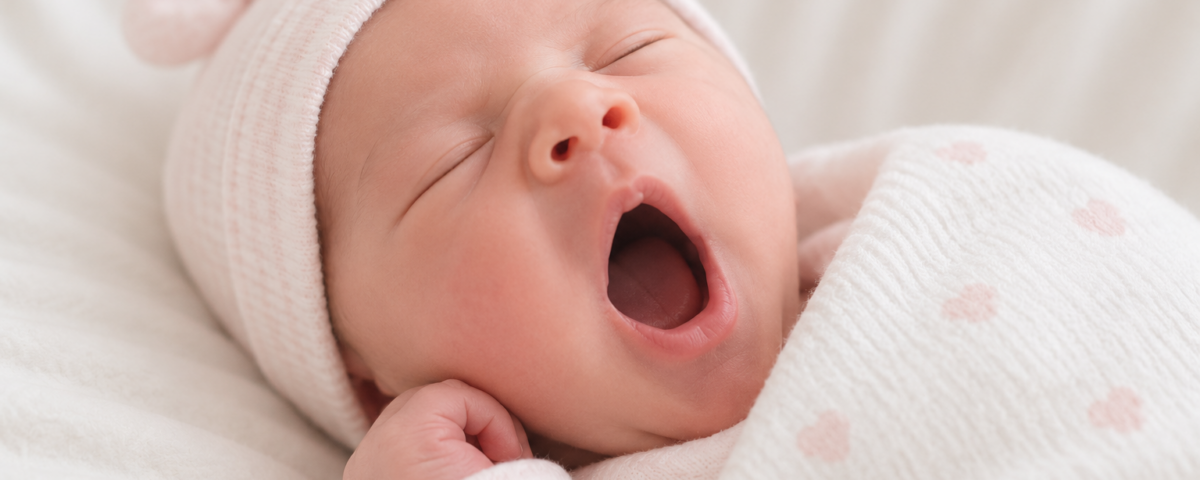
One of the hardest parts of caring for a newborn is figuring out what they need. Babies cannot tell us whether they are hungry, uncomfortable, overstimulated, or simply tired. Crying is often their last way of communicating, which is why learning to recognise early sleep cues can make life easier for both babies and parents.
Although sleep cues change as children grow, they all have the same purpose: helping parents recognise that it is time for sleep before overtiredness sets in.
What Are Sleep Cues?
Sleep cues are the physical and behavioural signs that a baby is becoming tired.
Every baby is different. Some show only one or two cues, while others display several in quick succession. The important thing is to learn your own child’s pattern.
Responding to early sleep cues often helps babies fall asleep more easily and enjoy longer, more restful naps.
Sleep Cues in Newborns (0–3 Months)
Newborns can stay awake for only short periods before they need sleep again. At first, their sleepy signs can be very subtle.
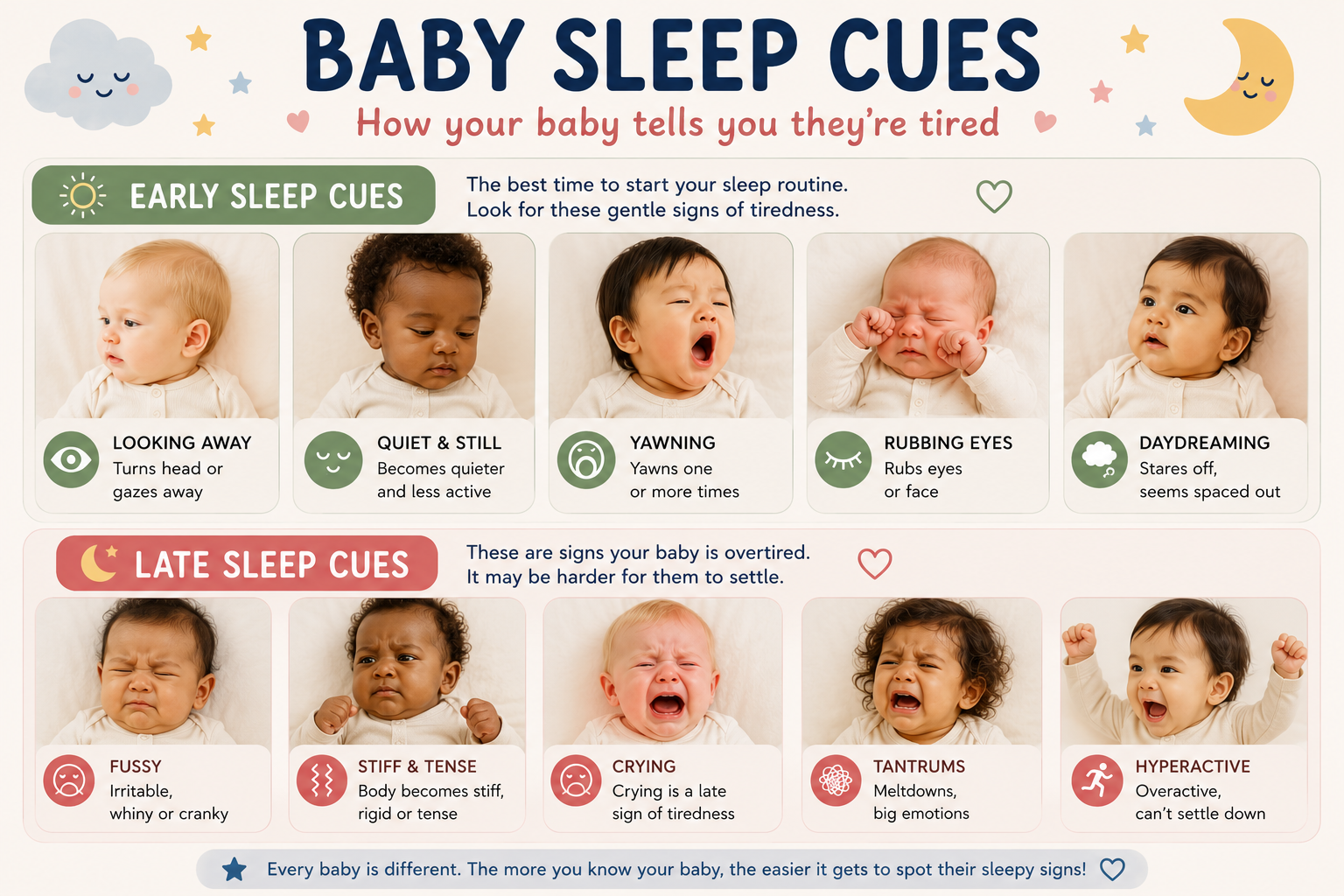
Common newborn sleep cues include:
- Looking away from faces or toys.
- Becoming quieter.
- Slower movements.
- Yawning.
- Rubbing their face or eyes.
- Brief staring spells.
- Fussiness that isn’t caused by hunger or a wet nappy.
Many parents wait until their newborn is crying before trying to settle them. In reality, crying is often a late sign that a baby has become overtired.
Sleep Cues in Babies (3–12 Months)
As babies grow, their sleepy signals usually become easier to recognise.
You may notice your baby:
- Rubs their eyes.
- Pulls at their ears.
- Yawns repeatedly.
- Becomes less interested in people or toys.
- Crawls away from stimulation.
- Wants extra cuddles.
- Becomes clingy or unusually quiet.
- Starts fussing for no obvious reason.
At this age, babies are also learning exciting new skills such as rolling, crawling, standing, and walking. Sometimes they become so interested in practising these abilities that they resist sleep even though they are clearly tired.
Sleep Cues in Toddlers
Toddlers can stay awake much longer than babies, but they still show clear signs that they need sleep.
Common toddler sleep cues include:
- Becoming unusually quiet.
- Losing interest in play.
- Rubbing their eyes.
- Yawning.
- Becoming clumsy.
- Asking to be carried.
- Becoming irritable or emotional.
- Having frequent tantrums over small things.
Many parents mistake these behaviours for stubbornness or bad moods when, in fact, the child simply needs rest.
Can Children Tell You They’re Tired?
As language develops, many children begin saying things like “I’m sleepy,” “I’m tired,” or “I want my bed.”
However, not all toddlers recognise their own tiredness.
Young children often want to keep playing, even when they are exhausted. Instead of saying they are tired, they may become hyperactive, laugh excessively, run around, argue, or resist bedtime.
For this reason, parents should continue watching for behavioural changes rather than relying only on what their child says.
Every Baby Has Their Own Sleep Cues
There is no single sleepy look that every baby shares. Some babies become very quiet before sleep, while others become noisy and active. Some rub their eyes every time they are tired, while others never do.
The more you observe your baby, the more familiar their unique sleep cues become. Learning those signals—and responding before overtiredness sets in—is one of the simplest ways to make naps and bedtime easier.
Sleep cues are your baby’s way of saying, “I’m ready to sleep.” From the subtle signs of a newborn to the emotional outbursts of an overtired toddler, recognising these changes helps parents respond before sleep becomes a struggle. Every child is different, but learning your own baby’s sleepy signs is one of the best tools for building healthy sleep habits from the very beginning.