

Why Does My Baby Move So Much During Sleep?
June 13, 2026
How Babies Breathe: What’s Normal, What’s Not, and When to Seek Help
June 14, 2026
Summary
Sleep deprivation is a common part of caring for a newborn. Frequent feeding, diaper changes, and other caregiving tasks often interrupt sleep, while many parents also remain alert because they are concerned about their baby’s wellbeing. Over time, inadequate or fragmented sleep can affect concentration, memory, mood, decision-making, and physical health. While some fatigue is expected during the newborn months, prioritizing rest, accepting help, and addressing persistent anxiety can help parents protect their wellbeing and better care for their baby.
If you are caring for a newborn, chances are you know what it feels like to be tired. Not simply sleepy after a late night, but exhausted in a way that affects your thoughts, emotions, concentration, and daily functioning.
Sleep deprivation is one of the most common challenges faced by parents of newborns. Yet despite how widespread it is, many people feel unprepared for its impact. They expect interrupted nights because baby needs feeding, comforting, or assistance. What often surprises them is thee extent of tiredness they feel, and the fact that sleep loss can continue even when baby is sleeping peacefully.
Many new parents hear the advice: “Sleep when the baby sleeps.” While well-intentioned, this advice overlooks a reality that countless families experience. Many parents do not sleep when the baby sleeps because they are worried. They lie awake listening for sounds. They repeatedly check whether their baby is breathing. They watch video monitors. They wake at every movement. Even when they have an opportunity to rest, anxiety can make sleep difficult.
Understanding why this happens—and how sleep deprivation affects both body and mind—can help parents recognize that what they are experiencing is common, understandable, and worthy of attention.
Sleep Deprivation Is More Than Feeling Tired
Sleep deprivation occurs when a person consistently gets less sleep than their body needs.
For most adults, healthy functioning requires approximately seven to nine hours of sleep per night. New parents, however, often experience fragmented sleep consisting of short stretches interrupted by feeds, diaper changes, crying, or frequent checks on their baby.
Research shows that fragmented sleep can be almost as disruptive as getting too little sleep overall. Even if the total number of hours appears adequate, repeated awakenings prevent the brain from progressing normally through essential sleep stages.
Over time, this accumulated sleep debt affects nearly every system in the body.
Why Newborn Parents Lose Sleep
Sleep deprivation among parents of newborns is a common reality. Babies wake regularly to feed because they have high nutritional needs, immature sleep-wake rhythms, and limited capacity to go long periods without feeding.
In the first months of life, baby sleep has not matured yet. Newborns wake regularly to feed because their stomachs are small and they cannot go long periods without nourishment. Parents may spend considerable time feeding, burping, changing diapers, soothing crying, settling the baby back to sleep, pumping milk, washing feeding equipment, or responding to periods of discomfort.
Many families are also adjusting to a completely new routine while recovering from childbirth, managing household responsibilities, and caring for older children. As a result, sleep often becomes fragmented into short stretches rather than occurring as one continuous period.
Even when a baby sleeps relatively well, parents may struggle to obtain enough restorative sleep because the practical demands of caring for a newborn continue around the clock.
Sleep Deprivation and Postpartum Recovery
For many mothers, sleep deprivation occurs alongside physical recovery from pregnancy and childbirth. In the weeks following birth, the body is healing from significant physical changes while also adapting to major hormonal shifts. Recovery may involve discomfort, pain, breastfeeding challenges, or the emotional adjustments that accompany becoming a parent.
At the same time, the body’s need for rest is often greater than usual. When sleep is limited or repeatedly interrupted, recovery can feel more difficult and fatigue may become even more pronounced. This combination of physical healing, hormonal changes, and disrupted sleep helps explain why many new mothers feel profoundly exhausted during the early months of parenthood.
Partners and other caregivers can also experience significant sleep loss, but mothers are often managing both caregiving demands and their own recovery simultaneously.
Why New Parents Often Lose Sleep Even When Their Baby Sleeps
 Popular culture often portrays parental exhaustion as the result of a crying baby who never sleeps. In reality, many parents remain awake despite having a sleeping baby.
This experience is especially common during the newborn months. Parents may find themselves:
- Checking whether their baby is breathing
- Listening for unusual sounds
- Watching a monitor continuously
- Replaying safe sleep recommendations in their minds
- Worrying that something might happen while they sleep
- Feeling unable to fully relax
From an evolutionary perspective, this hypervigilance makes sense. Human infants are completely dependent on their caregivers. Researchers believe that human caregivers are biologically predisposed to remain highly responsive to signs that a baby may need attention. Unfortunately, the same protective instincts that help keep babies safe can sometimes prevent parents from getting the rest they need.
Many parents describe sleeping “with one eye open.” Others say they wake repeatedly without any obvious reason, only to check on their baby and find everything perfectly normal.
This pattern does not mean a parent is irrational or overreacting. It reflects a powerful biological and emotional response to caring for a vulnerable child.
Why Fragmented Sleep Feels So Exhausting
Sleep quality matters just as much as sleep quantity. Many parents are surprised to find that even when they spend what seems like enough time in bed, they still wake up feeling exhausted. This is often because their sleep is fragmented into multiple short periods rather than occurring as one uninterrupted stretch.
During a typical night, the brain cycles through different stages of sleep, including deep sleep and REM sleep, both of which play important roles in physical recovery, memory consolidation, emotional regulation, and cognitive performance. Frequent awakenings can interrupt these natural cycles, preventing the body and brain from obtaining the full restorative benefits of sleep.
As a result, a parent who sleeps for seven hours in several short segments may feel significantly more tired than someone who sleeps for a shorter period without interruption. This is one reason why caring for a newborn can be so exhausting, even when the total number of hours spent asleep does not seem dramatically reduced.
The Effects of Sleep Deprivation on the Brain
Sleep is not simply a period of rest. During sleep, the brain performs critical functions related to memory, learning, emotional regulation, and decision-making. When sleep becomes inadequate, cognitive performance declines.
Research has consistently shown that sleep deprivation can affect:
Attention and Concentration
Parents may find themselves forgetting appointments, misplacing items, or struggling to focus on simple tasks. Some describe feeling mentally “foggy” throughout the day.
Memory
Sleep plays an important role in consolidating memories. Lack of sleep can make it harder to remember information or follow complex instructions.
Decision-Making
Sleep-deprived individuals are more likely to make errors and may have difficulty assessing risks accurately. For caregivers responsible for making health and safety decisions, this can be particularly challenging.
Reaction Time
Severe sleep deprivation can impair reaction times and attention to a degree that researchers have compared to alcohol impairment. This is especially relevant for driving, preparing meals, administering medications, or responding quickly during emergencies.
Sleep Deprivation and Emotional Health
One of the least discussed consequences of sleep loss is its effect on emotions. Many parents expect physical fatigue. Fewer expect the emotional impact.
Sleep deprivation can make people:
- More irritable
- More sensitive to stress
- More prone to frustration
- More likely to feel overwhelmed
- Less resilient when facing challenges
A minor inconvenience that would normally be manageable may suddenly feel impossible. This does not reflect weakness or poor coping skills. Sleep deprivation alters how the brain processes emotions.
Researchers have found that insufficient sleep increases activity in the amygdala, a brain region involved in emotional responses, while reducing communication with areas responsible for rational regulation. In practical terms, this means emotional reactions may become stronger while emotional control becomes more difficult.
The Link Between Sleep Deprivation and Anxiety
Many new parents experience a cycle that is difficult to break. They are tired because they are not sleeping. They become more anxious because they are tired. Then anxiety makes it even harder to sleep.
Sleep deprivation and anxiety have a bidirectional relationship. Each can worsen the other.
Parents may find themselves repeatedly checking their baby, even after receiving reassurance from healthcare professionals. They may feel unable to relax despite knowing their baby is safe.
The more exhausted they become, the more difficult it can be to evaluate these fears objectively.
Recognizing this cycle is important because it helps parents understand that some of their worries may be amplified by exhaustion itself.
Physical Effects of Chronic Sleep Loss
Sleep affects far more than the brain. Persistent sleep deprivation has been associated with:
Weakened Immune Function
People who sleep less may be generally more susceptible to illness.
For parents already exposed to childhood infections, this can create an additional burden.
Increased Risk of Accidents
Fatigue contributes to household accidents, workplace errors, and motor vehicle collisions.
Hormonal Changes
Sleep helps regulate hormones involved in appetite, stress, and metabolism.
Insufficient sleep may increase hunger, cravings for high-calorie foods, and feelings of stress.
Cardiovascular Health
Long-term sleep deprivation has been linked to elevated blood pressure and increased cardiovascular risk. While occasional sleepless nights are unlikely to cause lasting harm, chronic sleep loss deserves attention.
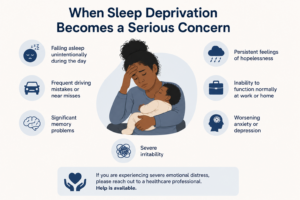
When Sleep Deprivation Becomes a Serious Concern
Some degree of fatigue is expected during the first months of having a newborn. However, certain signs suggest that sleep deprivation may be reaching unhealthy levels.
These include:
- Falling asleep unintentionally during the day
- Frequent driving mistakes or near misses
- Significant memory problems
- Persistent feelings of hopelessness
- Severe irritability
- Inability to function normally at work or home
- Worsening anxiety or depression
Parents experiencing severe emotional distress should seek support from a healthcare professional. Sleep deprivation can contribute to mental health difficulties, and help is available.
Why Parents Should Not Feel Guilty About Needing Sleep
Many parents place enormous pressure on themselves. They believe that being a good parent means remaining constantly alert and they feel guilty when they need rest. They worry that sleeping somehow means letting their guard down.
Yet sleep is not a luxury: It is a biological necessity.
A well-rested parent is often better equipped to make decisions, respond to challenges, regulate emotions, and provide care.
Taking sleep seriously is not selfish. It is part of caring for both yourself and your family.
Practical Ways to Reduce Sleep Deprivation
While there is no perfect solution during periods of intensive caregiving, several strategies may help.
Share Responsibilities When Possible
Alternating nighttime duties between partners or family members can create longer, uninterrupted sleep periods.
Accept Help
Many new parents hesitate to ask for assistance, feeling that they should be able to manage everything themselves. However, accepting help from trusted family members or friends can create valuable opportunities for rest and recovery. Consider asking for support with tasks that do not involve direct baby care, such as cooking, grocery shopping, laundry, cleaning, or running errands. By allowing others to take care of these responsibilities, you can protect precious time during the day to rest, recharge, or sleep while your baby is napping. Even short periods of uninterrupted rest can help reduce the effects of sleep deprivation and improve your overall wellbeing.
Prioritize Sleep Over Household Tasks
When possible, consider whether a chore can wait. Sleep often provides greater benefits than completing another task on an already exhausting day.
Limit Unnecessary Nighttime Stimulation
Bright screens, repeated internet searches about worst-case scenarios, and constantly checking on your baby can make it more difficult to fall asleep or return to sleep after waking. While it is natural to want reassurance, frequent monitoring can sometimes keep parents more alert than necessary.
If you wish to use a baby monitoring system, choose one that provides clear and reliable alerts when your attention may be needed. While monitoring devices do not replace safe sleep practices or medical advice, some parents find that knowing they will be notified of unusual events allows them to spend less time checking manually and more time resting.
Address Persistent Anxiety
If worries about a baby’s safety and wellbeing are preventing sleep night after night, discussing these concerns with a healthcare professional can be beneficial.
The Bottom Line
Sleep deprivation is one of the most common and challenging aspects of caregiving. It affects memory, concentration, emotions, physical health, and overall quality of life.
For parents of newborns, the problem is not always that the baby is awake. Often, the baby is sleeping, but the parent remains alert, listening, watching, and worrying. The instinct to protect a vulnerable child is powerful, and many families discover that fear—not only feeding schedules—is what keeps them awake.
The exhaustion of early parenthood often comes from a combination of practical caregiving demands, fragmented sleep, and the natural vigilance that comes with caring for a vulnerable newborn.